Last updated on September 1st, 2025 at 05:09 pm
Potsdam is like a breath of fresh air in the northern part of Germany. Its closeness to Berlin makes it a perfect destination for a day trip. Why choose this city over other so many other options to spend your time? Because it is different. Totally different from the spirit of Berlin and this shift is what it made me love it so much.
Best for: Couples, history buffs, food lovers and cinema enthusiasts
Although I recommend this city to everyone, couples and solo travelers might enjoy it more. Potsdam has this romantic vibe to it and it’s inviting its visitors to stroll its streets and park alleys for hours on end. Many of its buildings are from the 18th and 19th century, so it is eye-candy for both history and architecture buffs. Also, the city has a lot of good restaurants and bars with different specifics. I tried German, Indian, Italian, Scandinavian, and I loved them all!
Best time to visit: Okay, so now you have options, depending on the stuff you want to do or what you like. If you want to see Potsdam at its peak, go there during the summer. Although the temperatures are high, they are comfortable. The drawback is that summer is also the most crowded season and the most expensive as well. If you want to avoid all that, Potsdam is also very nice to visit in spring months, because you’ll have the chance to enjoy the parks, gardens and all the outdoor activities that the city has to offer. Another idea is to go there in November – December to experience the Christmas vibe. Germany is well known for its Christmas markets, so give it a shot!
Some fun facts about Potsdam:
- Potsdam is the capital of the state of Brandenburg. And speaking of Brandenburg, I’m sure you know one of Berlin’s most famous landmark, Brandenburger Tor. Well, Potsdam has its own version of the gate.
- The city served as residence for many Prussian kings, including Frederick William I and Frederick the Great.
- Potsdam made it on UNESCO World Heritage list with not one, not two, but with over 150 buildings, palaces and parks.
- Potsdam holds the location of the largest large-scale film studio in the world: Filmstudio Babelsberg. The whole thing occupies an impressive surface of approximately 25,000 square meters. Over the years it produced famous movies like The Book Thief, Beauty and the Beast, Casino Royale or The Grand Budapest Hotel.
How to get from Berlin to Potsdam
One of the reasons Potsdam is such a great day trip is how easy it is to reach from Berlin. The city is just about 25 km away, and you have several options depending on your budget, time, and travel style:
By train: When it comes to trains, you have two options. The first one is to take the S7 S-Bahn line from Berlin to Potsdam Hauptbahnhof (main station). The journey takes around 25–35 minutes and only requires an ABC ticket (same ticket valid for Berlin zones). Trains run frequently throughout the day. The second option is to take one of the regional trains (RE1) available, that connect Berlin Hauptbahnhof and Potsdam in about 25 minutes, often slightly faster than the S-Bahn!
By bus: Long-distance buses connect the two cities, but they’re slower (around 45–60 minutes) and less frequent than trains. Check the latest prices and timetable on Busbud or Omio.
By car: Driving from Berlin to Potsdam takes about 40 minutes, depending on traffic. It can be convenient if you plan to explore beyond Potsdam or travel with a group. If you don’t have a car available, you can rent one. Here are some of the most reliable options in Germany: GetRentacar.com, Rentalcars.com, DiscoverCars.
With a guided tour: If you’d like everything organized for you, several companies offer guided day trips to Potsdam from Berlin, including transport and a knowledgeable guide.
👉 Personally, I chose the train, and it was the perfect decision, because it was fast, reliable, and stress-free. Within 25 minutes I was already stepping into Potsdam and ready to explore its palaces and gardens.
Potsdam travel tips
Potsdam is really close to Berlin and visiting is doable in a day, but keep in mind that a day is still a short time so don’t expect to see everything there is. Although Potsdam is often considered one of the best day trips from Berlin, you can also stay here 2-3 days or even more and find new things to do and places to explore every day.
Get the right ticket: If you’re traveling from Berlin, buy an ABC zone ticket (or the Berlin WelcomeCard ABC) so your transport to Potsdam is covered.
Start early: Arrive in Potsdam by 9:00 AM to enjoy the palaces and gardens before they get busy.
Wear comfortable shoes: You’ll be walking a lot — especially in Sanssouci Park — so good shoes are a must.
Use public transport wisely: Potsdam’s trams and buses are efficient and can save you time between sights like Alexandrowka and the Glienicke Bridge.
Pack water and snacks: While there are restaurants and cafés, it’s handy to have something on hand, especially if you’re exploring the large palace grounds.
Book palace tickets in advance: If you plan to go inside Sanssouci Palace or other interiors, buy your tickets online to avoid long queues.
Check for seasonal events: Potsdam hosts lovely Christmas markets and summer festivals — worth planning your trip around.
Allow some flexibility: Even with a one-day itinerary, leave space to wander into hidden corners — Potsdam is full of surprises.
Best Potsdam one-day itinerary
If you only have one day in Potsdam, it’s important to follow a route that makes the most of your time. Starting from Potsdam Hauptbahnhof, here’s a logical order that will let you see the highlights without rushing too much.
Quick Itinerary Summary:
📍 Start: Potsdam Hauptbahnhof (Main Train Station)
📍 Morning: Sanssouci Park & Sanssouci Palace
📍 Midday: Dutch Quarter (lunch + stroll through red-brick houses)
📍 Afternoon: Alexandrowka (Russian Colony) + City Gates (Brandenburg Gate, Nauener Tor, Jägertor)
📍 Evening: Glienicke Bridge + dinner nearby
Morning: Sanssouci Park & Sanssouci Palace
From Potsdam Hauptbahnhof, take a short bus ride or a 20–25 minute walk to Sanssouci Park, the jewel of the city. The park is a UNESCO World Heritage site and stretches across vast grounds filled with palaces, gardens, fountains, and statues.
Highlights include:
- Sanssouci Palace – the summer residence of Frederick the Great.
- Chinese House – an ornate pavilion with exotic details.
- New Chambers and the Picture Gallery.
Plan at least 2–3 hours here to enjoy both the park and the interiors.
Midday: Dutch Quarter (Holländisches Viertel)
Head back toward the city center for lunch in the Dutch Quarter, a charming area of over 130 red-brick houses built in the 18th century. Today it’s filled with cozy cafés, restaurants, and boutique shops.
🍴 Recommended: Try local German dishes or a casual café lunch before continuing your walk.
Afternoon: Alexandrowka & City Gates
After lunch, make your way to Alexandrowka, the Russian Colony built in the 19th century as a gift of friendship between Prussia and Russia. The wooden houses, museum, and Orthodox church give this area a peaceful village feel.
On your way back toward the city center, explore Potsdam’s historic city gates:
- Brandenburg Gate – not to be confused with Berlin’s, built to honor Frederick the Great’s victory.
- Nauener Tor – with a fairytale Gothic vibe.
- Jägertor (Hunter’s Gate) – the oldest surviving gate.
Evening: Glienicke Bridge & Dinner
End your day at the famous Glienicke Bridge, also known as the “Bridge of Spies.” During the Cold War, this was the site of dramatic spy exchanges between East and West. Today, it’s a fascinating historical landmark and a scenic place for photos.
Finish with dinner at a nearby restaurant before heading back to Berlin by train.
👉 This route keeps walking distances manageable, covers all the highlights, and ensures you experience both Potsdam’s royal palaces and its cultural neighborhoods.
Top things to see in Potsdam in one day (for extra info)
If you want to know more about any of the attractions you’re about to see on your itinerary, follow along.
1. Potsdam City Palace (Potsdamer Stadtschloss)
The City Palace building was by turn, the winter residence of German princes, kings of Prussia and German emperors (Kaisers). It is located in the Old Market Square, next to St. Nicholas Church. Unfortunately, it was heavily destroyed multiple times throughout history, nowadays having standing only the former palace stables.

2. St. Nicholas Church
St. Nicholas is one of Potsdam’s most notable landmarks. Since its building finished (1837), the church has seen fires, wars, changes in its architecture. Nowadays it is a Lutheran church, with an important role in the locals’ lives, housing many events, including concerts. St. Nicholas is 77 meters tall and from the top of the dome, which is open to the public, you can enjoy a vast view of Potsdam.

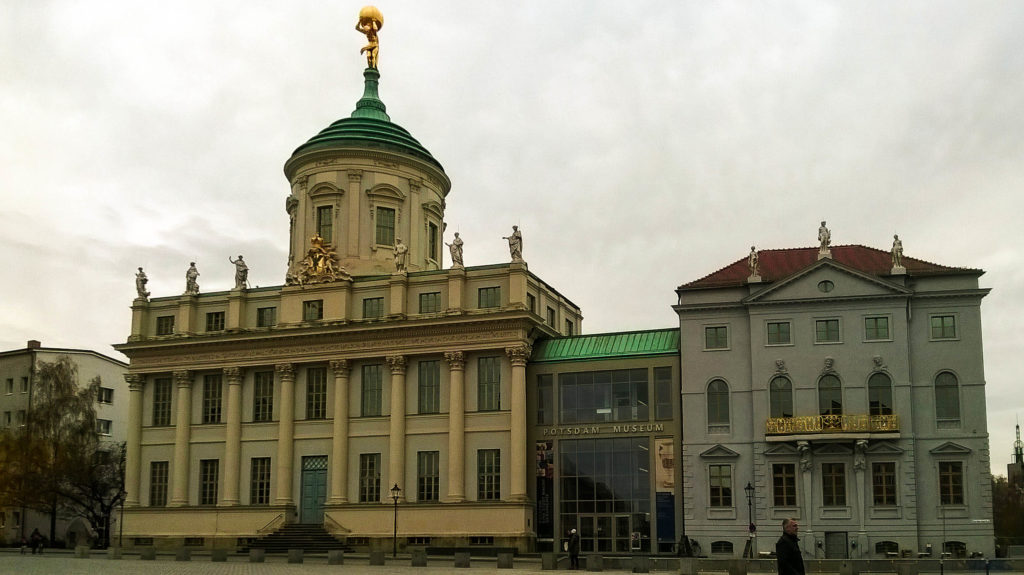
Tip: Since you’re at the Old Market Square, you can also visit Potsdam Museum and find out more about the city history.
3. Sanssouci Park & Sanssouci Palace
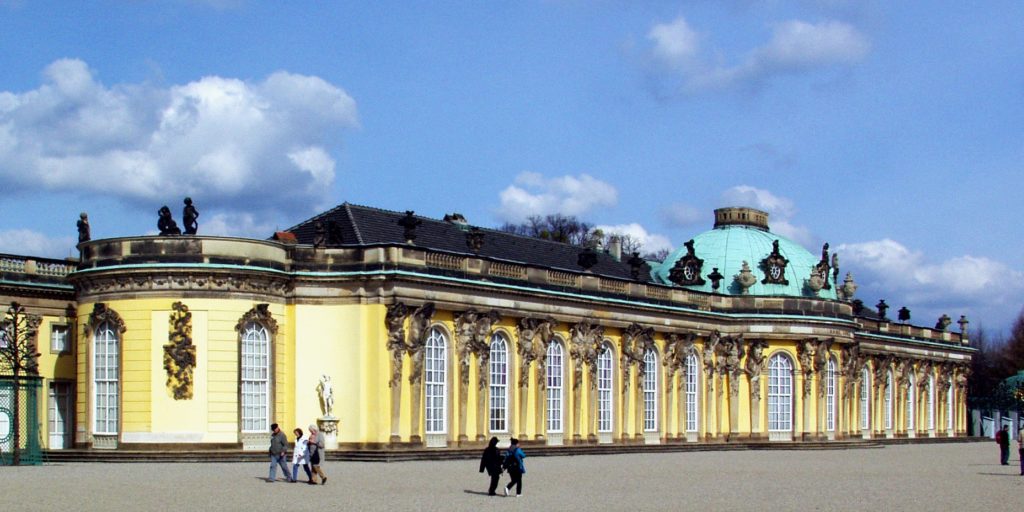
Visiting Sanssouci Park is a nice way to spend a few hours in the outdoors, strolling on its alleys or having a picnic. The park is really big and it’s filled with many buildings, gardens, fountains and statues. And speaking of buildings, we can mention: Chinese House, Antique Temple, Picture Gallery, New Chambers and of course, Sanssouci Palace, which used to be the summer palace of Frederick the Great, king of Prussia. Because of its beauty and complexity, the Sanssouci ensemble is often compared to the famous Versailles (France).
4. Potsdam’s city gates (Nauen Gate, Hunter’s Gate, Brandenburg Gate)
As the city expanded over time, some parts of the city walls got demolished and new ones were built instead constantly. Only a few gates fully survived in the process, others didn’t and others were simply incorporated into other types of constructions, like houses.
If you want to see the only three gates that are still preserved, the best way to do so is to start at Brandenburg Gate, then walk along Schopenhauerstraße and turn right on Hegelallee. Go straight ahead and you’ll see Hunters’ Gate, then Nauen Gate a little further.
Brandenburg Gate
Since it shares the same name with the famous Brandenburg Gate from Berlin, people often confuse the two, but at the same time this confusion helped Potsdam’s Brandenburg Gate gain a huge level of popularity. The structure resembles a triumphal arch, which it actually is, considering that the version we see today – previously there was another gate on the same spot – was built to honor the victory of Frederick the Great in the Seven Years’ War. An observant eye will see that the arch is very similar to a Roman one and that will be correct. That is because the gate was built with having the Arch of Constantine from Rome as source of inspiration.

2019 alert: Although it is located in a public space, free to visit and all, you will not be able to see the gate if you visit Potsdam in 2019, as the structure is covered in scaffolds for renovation.
Hunters’ Gate (Jägertor)
From all the fully preserved gates of Potsdam, Hunter’s Gate is the oldest and also the smallest. Its name is pretty descriptive, considering that the royal hunting grounds used to start right beyond the gate.
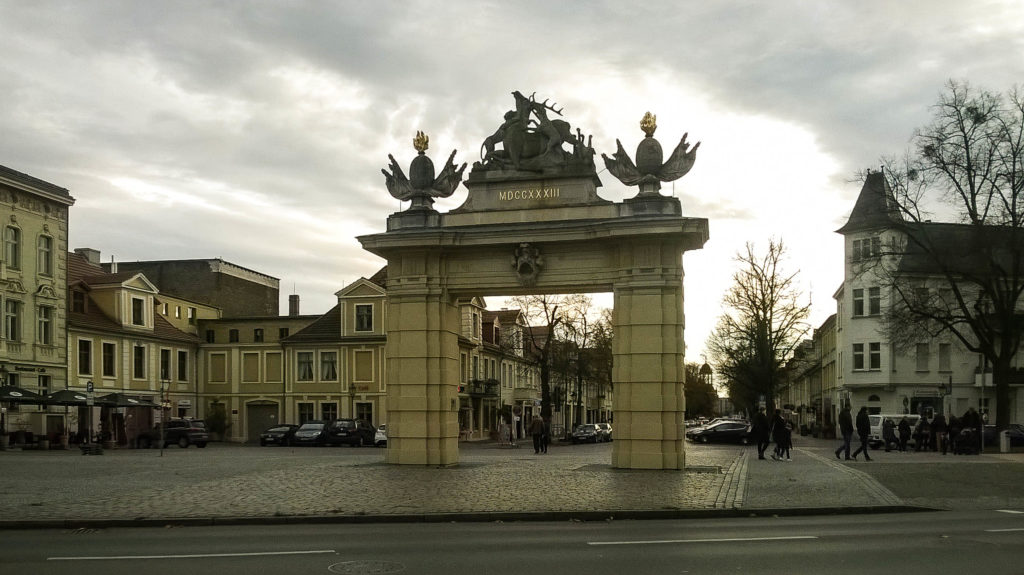
Nauen Gate (Nauenen Tor)
For me it was the most impressive out of the three, because of the fairytale vibe I got from it. The gate was built in 1755 in Neo-Gothic architectural style, after a sketch of Frederick the Great. It’s central arched opening serves as a passing point for trams and buses, whereas the two smaller ones on the sides are for pedestrians. Also, it is located very close to the Dutch Quarter, our next stop.

5. The Dutch Quarter (Holländisches Viertel)
This neighborhood consists of a little over 130 houses, all built of red bricks between 1734 and 1742. It holds an amazing record: the biggest Dutch populated area outside Netherlands.There are two museums here, one dedicated to Johann Boumann, the architect of the area, and the other dedicated to the general history of the Dutch Quarter.

6. Alexandrowka, the Russian Quarter
This quarter was born from the friendship of Frederick William III with Czar Alexander. The quaint wooden houses are all built in Russian style and the whole neighborhood is now part of UNESCO World Heritage. Because of its location at the outskirts of the city, the quarter is very green and quiet, perfect for a stroll in almost any season. If you want a complete Russian experience, make sure to stop by the museum (although you will get only information in German), by the restaurant to try out traditional Russian dishes and beverages and also by the small Orthodox church located in the nearby forest.

7. Glienicke Bridge
Although surely it is not the biggest, the prettiest or the most elegant bridge you have ever seen, Glienicke Bridge played an important role in the history of Potsdam and not only, as it represented the border between West Berlin and East Germany during the Cold War. Because of its important role, it was used overtime as a place to exchange espionage agents, which is why it is also largely known as Bridge of Spies.
8. Potsdam Christmas Market (seasonal)
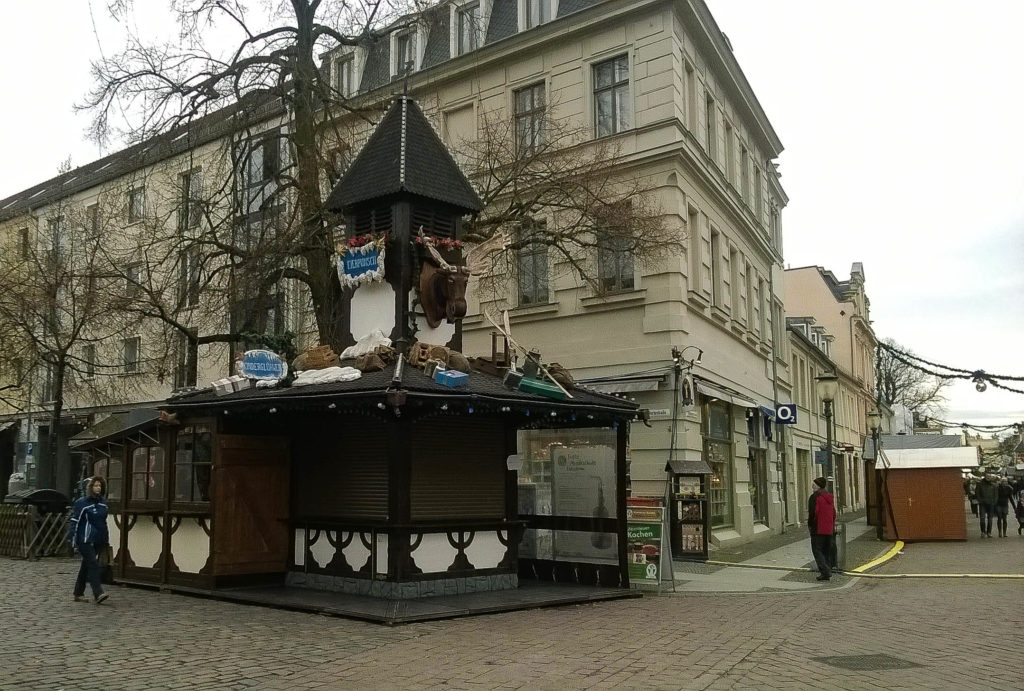
Like I said in the beginning, if you happen to visit Potsdam in November or December, you’ll get to experience the Christmas Market. Although it’s not comparable in size with the one in Berlin, this one was my personal favorite, because it gave me a more intimate feeling and it had a less commercial vibe. In the middle of the stalls with ginger bread, mulled wine and the famous German sausages, there was a live performance of Christmas carols, which made everything appear even more magical than it already was.
In conclusion, Potsdam is a place where you just have to go around the corner to completely change the scenery. It’s a city constructed like a puzzle of multiculturalism, holding something exciting for everyone. To wrap things up, and make it easy for you to follow my itinerary, here’s a suggested timetable:
- 09:00 – Arrive at Potsdam Hauptbahnhof
Grab a quick coffee and start your adventure. - 09:30 – 12:00 – Sanssouci Park & Sanssouci Palace
Explore the palace interiors, gardens, and highlights like the Chinese House and Picture Gallery. - 12:15 – 13:30 – Lunch in the Dutch Quarter
Enjoy a relaxed meal surrounded by red-brick houses and local shops. - 13:45 – 15:30 – Alexandrowka (Russian Colony)
Stroll through the wooden houses, visit the small museum, and check out the nearby Orthodox church. - 15:45 – 17:15 – Potsdam’s Historic City Gates
Walk through Brandenburg Gate, Nauener Tor, and Jägertor. Take time for photos and enjoy the city vibe. - 17:30 – 18:30 – Glienicke Bridge (Bridge of Spies)
Learn about its Cold War history while enjoying the riverside views. - 19:00 – Dinner in Potsdam
Wrap up your day with a hearty meal before heading back to Berlin by train.
Have you ever been to Potsdam and if not, would you pick it for a day trip from Berlin? What caught your attention the most? Comment below and let me know what are your thoughts on this destination.
Potsdam Day Trip FAQs
Yes — one day is enough to see the main highlights like Sanssouci Palace, the Dutch Quarter, Alexandrowka, and the Glienicke Bridge. You won’t be able to see every palace and museum in detail, but with a well-planned route, you can cover the city’s most important sights in a single day.
Yes, but make sure you buy the Berlin WelcomeCard ABC version, which covers Potsdam (zone C). This allows you to take the S-Bahn, regional trains, trams, and buses to and within Potsdam without buying extra tickets.
Mostly, yes. The city center, Dutch Quarter, and city gates are very walkable. However, Sanssouci Park and Alexandrowka are more spread out, so you’ll likely use a bus or tram to save time. A mix of walking and short public transport rides works best for a one-day visit.
I recommend starting your day by 9:00 AM. This gives you enough time to explore Sanssouci Park in the morning before it gets crowded, enjoy a relaxed lunch in the Dutch Quarter, and still have the afternoon and evening free for Alexandrowka, the city gates, and the Glienicke Bridge.